
Are you a small business owner struggling to secure funding? You’re not alone. Many SMEs face challenges when trying to access capital, but there’s a solution that can help.
Government-backed financing options can provide the necessary funds to grow your business. With the backing of the government, these loans offer more favorable terms and lower risks for lenders, making it easier for SMEs to qualify.
Understanding these options is crucial for small business owners looking to expand or stabilize their operations. In this article, we’ll explore the ins and outs of government-backed loans and how they can benefit your business.
Key Takeaways
- Government-backed loans offer more favorable terms for SMEs.
- SBA loans are a type of government-backed financing.
- These loans can help small businesses access capital.
- Favorable terms include lower interest rates and longer repayment periods.
- Government backing reduces the risk for lenders.
Understanding Government-Backed Loans for SMEs
For many SMEs, accessing capital is a significant hurdle, but government-backed loan programs can help bridge this gap. Government-backed loans offer a unique opportunity for small businesses to secure funding that might not be available through traditional commercial channels.
How Government Loan Guarantees Work
Government loan guarantees work by having the government assume a portion of the risk associated with lending to SMEs. This means that if an SME defaults on a loan, the government will cover a significant portion of the loss, reducing the risk for lenders. As a result, lenders are more willing to offer loans to SMEs that might not meet the strict criteria of traditional commercial loans. This guarantee can be the difference between securing funding and being denied.
Benefits Over Traditional Commercial Loans
Government-backed loans offer several benefits over traditional commercial loans, including more favorable terms and lower interest rates. Because the government guarantee reduces the lender’s risk, SMEs can often secure better loan conditions, such as longer repayment periods and lower monthly payments. According to a quote from the SBA Administrator, “Government-backed loans are a vital tool for small businesses, providing them with the capital they need to grow and succeed.” As noted by the Administrator, these loans are crucial for the growth and development of SMEs.
Moreover, government-backed loans can provide access to capital for startups and businesses in underserved communities, promoting economic growth and development. By leveraging these loan programs, SMEs can not only secure the funding they need but also contribute to the overall health of the economy.
Types of SBA Loans and Government Funding Programs
The Small Business Administration (SBA) offers a variety of loan programs designed to support small and medium-sized enterprises (SMEs) in the United States. These programs are tailored to meet the diverse needs of businesses, from startups to established companies looking to expand.
SBA 7(a) Loan Program
The SBA 7(a) Loan Program is one of the most popular loan programs offered by the SBA. It provides financial assistance to businesses for a variety of purposes, including working capital, equipment purchases, and real estate acquisition. The loan amount can go up to $5 million, with favorable terms such as lower down payments and longer repayment periods.

CDC/504 Loan Program
The CDC/504 Loan Program is designed to help small businesses finance major fixed assets, such as real estate or equipment. This program involves a partnership between the SBA, a Certified Development Company (CDC), and a lender, typically a bank. It offers long-term, fixed-rate financing with a low down payment requirement, making it an attractive option for businesses looking to invest in their infrastructure.
SBA Microloans
SBA Microloans are designed for small businesses that need a smaller amount of capital. These loans can be used for working capital, inventory, or equipment purchases. The maximum loan amount is $50,000, and the average loan size is around $13,000. Microloans are particularly beneficial for startups or businesses in underserved communities.
Disaster Assistance and Economic Injury Loans
The SBA also offers disaster assistance loans and economic injury disaster loans (EIDLs) to businesses affected by natural disasters or economic downturns. These loans provide critical financial assistance to help businesses recover from disasters or stabilize during economic hardships. The loan terms are favorable, with low interest rates and extended repayment periods.
In conclusion, the SBA offers a range of loan programs to support SMEs in various stages of their business lifecycle. Understanding these options can help business owners make informed decisions about their financing needs.
Eligibility Requirements for Government-Backed SME Loans
Understanding the eligibility requirements for government-backed SME loans is crucial for small businesses seeking financial assistance. These requirements help determine whether a business qualifies for a loan and what steps it needs to take to meet the eligibility criteria.
Business Size Standards by Industry
The Small Business Administration (SBA) sets size standards for businesses to qualify for government-backed loans. These standards vary by industry and are typically based on the number of employees or annual revenue. For instance, a manufacturing business might be considered small if it has fewer than 500 employees, while a retail business might qualify if its annual revenue is less than $7 million. It’s essential to check the SBA’s size standards for your specific industry to determine eligibility.
Financial Requirements and Credit Score Minimums
Businesses must also meet certain financial requirements, including minimum credit score thresholds. Lenders typically look for a credit score of 640 or higher, though this can vary. Additionally, businesses must demonstrate the ability to repay the loan, which involves providing financial statements and tax returns. A strong financial history can significantly improve loan approval chances.
Time in Business and Revenue Thresholds
Most government-backed loan programs require businesses to have been operational for a certain period, often at least two years. Revenue thresholds may also apply, with some programs requiring businesses to have a minimum annual revenue. These requirements help ensure that loan funds are allocated to established businesses with a viable financial future.
Legal Structure and Citizenship Requirements
Businesses must be legally structured as a for-profit entity and be owned and controlled by U.S. citizens or legal residents. Certain loan programs may have additional requirements, such as being a minority-owned or woman-owned business.
“To be eligible for an SBA loan, your business must meet specific legal and citizenship requirements, so it’s crucial to review these criteria carefully.”
By understanding these eligibility requirements, SMEs can better navigate the application process for government-backed loans and increase their chances of securing the funding they need.
Step-by-Step Application Process for SBA Loans
For SMEs seeking financial assistance, understanding the SBA loan application process is crucial. The process involves several key steps that can be navigated efficiently with the right guidance.
Gathering Required Documentation
The first step in applying for an SBA loan is gathering the necessary documentation. This includes business financial statements, tax returns, and a comprehensive business plan. Lenders use this information to assess the creditworthiness and viability of your business. Ensure that your financial records are up-to-date and accurately reflect your business’s financial health.
Additionally, you’ll need to provide personal financial statements and tax returns for all major owners. This helps lenders evaluate the personal creditworthiness of the business owners. Having all required documents ready can streamline the application process.
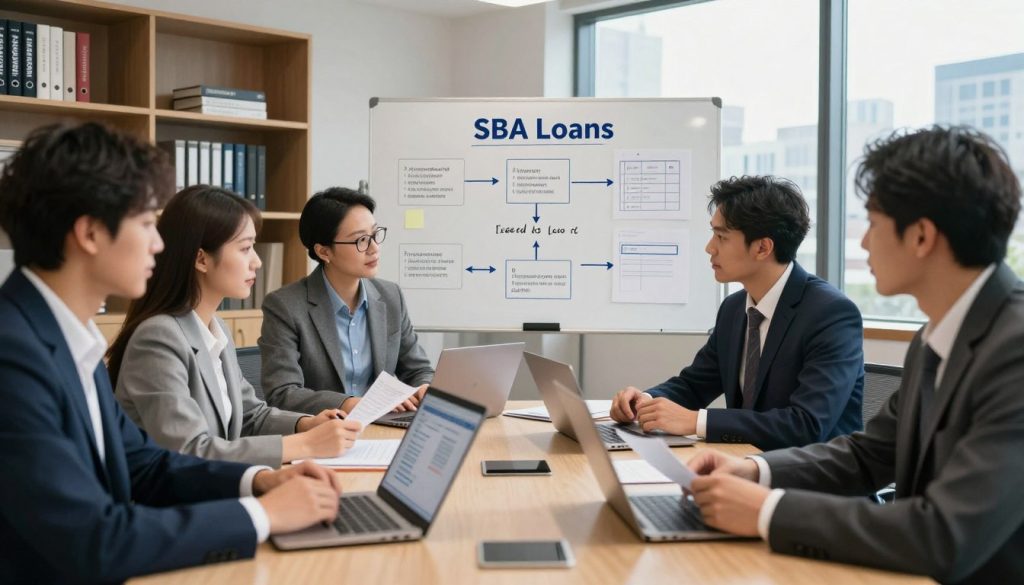
Finding and Selecting SBA-Approved Lenders
Not all lenders are approved to offer SBA loans. SMEs must find and select an SBA-approved lender that meets their needs. You can check the SBA’s website for a list of approved lenders. Consider factors such as interest rates, loan terms, and the lender’s experience with SBA loans when making your selection.
Completing SBA Forms and Applications
Once you’ve selected a lender, the next step is completing the SBA loan application forms. The most common form is the SBA Form 413, which provides a detailed picture of your personal and business financial situation. Ensure that you fill out the forms accurately and completely to avoid delays in the application process.
Your lender will also require a comprehensive business plan and other supporting documents. Work closely with your lender to ensure that all necessary information is provided.
Understanding Approval Timelines and Next Steps
After submitting your application, the approval process typically takes 30 to 90 days, depending on the complexity of the loan and the lender’s workload. During this time, your lender may request additional information or clarification on certain aspects of your application.
Once your loan is approved, you’ll work with your lender to finalize the loan terms and complete the disbursement process. Understanding the approval timeline and next steps can help you plan and prepare for the funding you need to grow your business.
Maximizing Your Chances of Loan Approval
With the right strategy, small businesses can significantly enhance their prospects of getting approved for a government-backed loan. Understanding the key factors that lenders consider during the application process is crucial.
Developing a Compelling Business Plan
A well-crafted business plan is essential for demonstrating your business’s potential for growth and repayment capability. It should include detailed financial projections, market analysis, and a clear outline of your business goals. A robust business plan not only helps in securing loans but also guides your business strategy.
Improving Your Personal and Business Credit Profiles
Lenders often evaluate both personal and business credit scores when considering loan applications. Maintaining a good credit history by making timely payments and keeping credit utilization low can significantly improve your loan eligibility. You can check your credit reports regularly to ensure there are no errors.
Working with SCORE Mentors and Small Business Development Centers
Seeking guidance from SCORE mentors and Small Business Development Centers can provide valuable insights into the loan application process. These resources offer free or low-cost mentoring and can help you refine your business plan and financial projections.
Alternative Funding Options if Your Application is Denied
If your loan application is denied, it’s not the end of the road. Alternative funding options such as invoice financing, merchant cash advances, or crowdfunding can provide the necessary capital. Understanding these alternatives can help you make informed decisions about your business’s financial future.
| Funding Option | Description | Typical Use Case |
|---|---|---|
| Invoice Financing | Using outstanding invoices as collateral for a loan | Immediate cash flow needs |
| Merchant Cash Advance | A lump sum payment in exchange for a percentage of future sales | Short-term business expenses |
| Crowdfunding | Raising funds from a large number of people, typically online | Product launches or project funding |
Conclusion
Government-backed loans for SMEs offer a vital lifeline for businesses looking to expand, innovate, or simply sustain operations. Through programs like SBA loans, small businesses can access capital that might otherwise be out of reach.
By understanding the various types of government-backed loans available, such as the SBA 7(a) and CDC/504 loan programs, SMEs can make informed decisions about their financing options. Eligibility requirements, including business size standards and financial thresholds, are crucial to consider.
The application process, while detailed, is navigable with the right preparation. Developing a compelling business plan, improving credit profiles, and working with SBA-approved lenders can significantly enhance loan approval chances.
For small businesses in the United States, leveraging government-backed loans can be a strategic move towards achieving growth objectives. Explore these financing options to unlock your business’s full potential.
FAQ
What are government-backed loans for SMEs?
Government-backed loans for SMEs are financing options provided by lenders, with a guarantee from the government, typically through the Small Business Administration (SBA). These loans are designed to support small businesses by offering more favorable terms than traditional commercial loans.
What types of SBA loans are available to small businesses?
The SBA offers several loan programs, including the SBA 7(a) Loan Program, CDC/504 Loan Program, SBA Microloans, and Disaster Assistance and Economic Injury Loans. Each program has its own eligibility criteria and application process.
What are the eligibility requirements for SBA loans?
Eligibility requirements for SBA loans include business size standards by industry, financial requirements, credit score minimums, time in business, revenue thresholds, and legal structure and citizenship requirements. SMEs must meet these criteria to qualify for SBA loans.
How do I apply for an SBA loan?
To apply for an SBA loan, you need to gather required documentation, find and select an SBA-approved lender, complete SBA forms and applications, and wait for approval. Understanding the application process and required documents can help streamline your application.
What can I do if my SBA loan application is denied?
If your SBA loan application is denied, you can explore alternative funding options, such as online lenders, invoice financing, or crowdfunding. You can also work on improving your credit profile, developing a more compelling business plan, and seeking guidance from SCORE mentors or Small Business Development Centers to increase your chances of approval in the future.
How can I maximize my chances of SBA loan approval?
To maximize your chances of SBA loan approval, focus on developing a solid business plan, improving your personal and business credit profiles, and working with SBA-approved lenders. Additionally, seeking guidance from SCORE mentors and Small Business Development Centers can help you navigate the application process and improve your loan application.
What is the role of the SBA in government-backed loans?
The SBA guarantees a portion of the loan provided by lenders, reducing the risk for lenders and making it easier for SMEs to access financing. The SBA also sets eligibility criteria and provides resources for small businesses to help them navigate the loan application process.